
Carpet Restretching Repair Service
Breadcrumbs
These links will help you get back to where you want to go faster.
Understanding Carpet Restretching
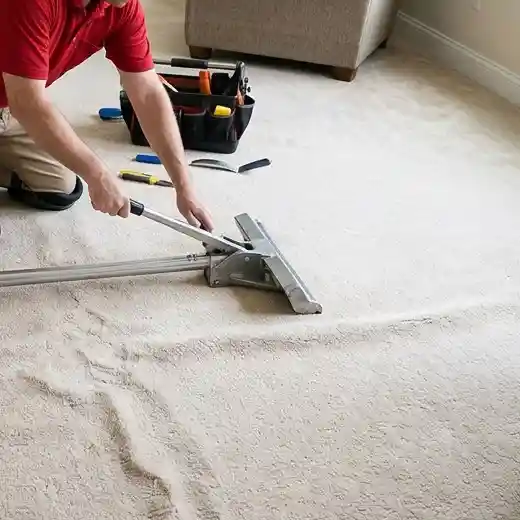
Carpet restretching is a process undertaken to remove wrinkles, bubbles, or looseness in installed carpet by pulling the carpet tighter and securing it to the edges of the flooring area. This technique is typically employed when a carpet has begun to sag or loosen over time due to foot traffic, moisture, or improper initial installation.
Restretching involves lifting the carpet from the tack strips—narrow strips with embedded nails used to anchor the carpet edges—in the perimeter of the room. Using specialized tools such as a power stretcher or knee kicker, the carpet is stretched across the floor to eliminate wrinkles and ensure a smooth, firm surface. Once properly stretched, the carpet is re-attached to the tack strips, trimmed if necessary, and the edges are tucked neatly along the baseboards or thresholds.
This maintenance procedure is considered essential to prolong the lifespan of the carpet, prevent tripping hazards caused by ripples, and restore the aesthetic appeal of the flooring. Carpet restretching may sometimes be preferable to complete carpet replacement, depending on the extent of damage and wear.
Best Carpet Restretching Service Phoenix AZ
Call us at 480-696-0966

Carpet restretching is a vital maintenance service that restores the beauty, safety, and longevity of your floors. In Phoenix, Arizona, where dry heat and fluctuating humidity can accelerate carpet wear, timely restretching ensures your floors remain smooth, secure, and visually appealing without the expense of full replacement.
Carpets are installed tightly stretched over a floor to stay flat and secure. Over time, various factors such as heavy foot traffic, furniture movement, pet activity, and seasonal humidity changes can cause this tension to relax. When the carpet pulls loose from the tack strips along the edges, wrinkles, ripples, or buckles develop.
In Phoenix’s climate, the combination of dry heat and humidity swings can exacerbate these issues. Loose carpet fibers can wear unevenly, trap dust and dirt, and pose safety hazards including tripping. Ignoring these signs only worsens damage and increases future repair costs.
How Professional Carpet Restretching Works
Restretching is a skilled process that reinstates the original tension and fit of your carpet. Experienced technicians begin by inspecting the entire carpet surface to identify loosened or bubbled areas. They then carefully detach the carpet edges from tack strips, use specialized power stretching equipment to pull the carpet taut, and resecure it firmly.
After stretching, the carpet’s edges are trimmed and tucked neatly against the walls for a seamless finish. Because restretching preserves the existing carpet, it is a cost-effective and less disruptive alternative to complete carpet replacement, making it an ideal solution for homeowners and property managers alike.
Restretching Techniques Tailored to Carpet Pile Types
The carpet pile—the surface fiber length and texture—plays a crucial role in determining restretching methods. Different pile constructions respond uniquely to tension, requiring customized techniques to avoid fiber distortion or damage.
Schedule Your Cleaning Appointment
Our Cleaning Services
Different Types of Carpet Restretching
| Pile Type | Description | Restretching Approach |
|---|---|---|
| Low Pile | Short, dense fibers that maintain tension well | Precise power stretching and meticulous edge tucking to ensure smoothness |
| Medium Pile | Common residential carpet with moderate fiber height | Controlled tension adjustments to avoid crushing while removing wrinkles |
| High Pile | Longer, plush fibers that can mask ripples | Gentle stretching focused on backing integrity and fiber preservation |
| Cut Pile | Fibers are cut, producing a smooth, uniform surface | Standard stretching with clean edge finishing, especially at seams |
| Loop Pile | Uncut loops, durable but prone to snagging if overstretched | Delicate tension control to prevent loop distortion and damage |
| Cut Loop | Combination of cut and looped fibers creating pattern and texture | Balanced stretching to protect both types while maintaining design integrity |
| Berber | Dense loop construction with a natural, textured appearance | Measured tension and edge work to maintain loop structure and pattern |
| Shag | Long, loose fibers concealing backing beneath | Careful backing location and minimal pressure stretching |
| Frieze | Twisted, curly fibers with a textured surface | Focused tension management to avoid flattening or distortion |
Restretching Considerations for Different Carpet Fiber Types
Carpet fibers vary in resilience, elasticity, and response to heat and moisture, influencing restretching techniques. Recognizing these differences ensures the carpet’s fiber structure remains intact while wrinkles and buckles are corrected.
| Fiber Type | Key Characteristics | Restretching Considerations |
|---|---|---|
| Nylon | Strong, resilient, widely used | Firm stretching tolerated well; retains shape after restretch |
| Polyester | Soft, stain-resistant, less elastic | Moderate tension to prevent sagging or over-extension |
| Polypropylene (Olefin) | Resistant to moisture and stains | Lower heat tolerance requires careful attention during stretching to avoid fiber flattening |
| Wool | Natural, durable, elastic | Gentle, controlled tension to protect delicate fibers |
| Triexta | New high-performance fiber with excellent durability | Balanced stretching respecting fiber resilience and flattening risk |
Why Momentum Carpet & Floor Care Is Your Best Choice in Phoenix
Momentum Carpet & Floor Care offers highly specialized, tailored carpet restretching services throughout Phoenix and surrounding areas. Unlike generic solutions, their expert team assesses each carpet’s unique pile type, style, and fiber to choose the most effective stretching approach, ensuring both aesthetics and longevity.
Whether addressing minor wrinkles or extensive buckling, Momentum’s process restores smoothness and safety while preserving your carpet’s beauty. Their commitment to quality workmanship, customer satisfaction, and cost-effectiveness makes them a trusted choice for homeowners and property managers alike.
Common Signs That Your Carpet Needs Restretching
Recognizing early signs can save you considerable expense and inconvenience down the line. Look for visible ripples or waves that do not flatten underfoot, carpet edges lifting from walls, separating seams, or areas where the carpet feels loose when walked upon.
Addressing these problems promptly not only enhances your home’s appearance but also prevents dirt accumulation, wear, and tripping hazards. Early intervention through professional restretching often restores the carpet’s condition and extends its useful life significantly.
Comparing Carpet Pile and Fiber Types: Protecting Your Flooring
Understanding the interplay between carpet construction and fiber ensures optimal restretching results. Different pile heights—from low and medium to shag—and styles like cut, loop, or frieze require customized tension techniques. Likewise, fiber types like nylon, wool, and polypropylene respond uniquely to stretching forces.
For example, delicate wool carpets need gentle, precise tensioning to preserve fiber elasticity, while nylon carpets tolerate stronger power stretching due to their resilience. Similarly, loop-pile carpets require careful handling to avoid snagging, while Berber carpets demand alignment techniques to maintain patterns.
Extending Carpet Life with Expert Restretching
Regular maintenance, including restretching, is a cost-effective way to maximize your carpet investment. Properly stretched carpets lay flat, resist premature wear, maintain fiber alignment, and prevent safety hazards. Momentum Carpet & Floor Care’s tested methods balance vigorous power stretching with protective care of fibers and backing.
This approach reduces the need for early replacement and keeps your indoor environment attractive and safe for years. Investing in professional restretching services not only restores visual appeal but also adds peace of mind.
Restore, Protect, and Enhance Your Carpets Today
If your carpets in Phoenix are showing signs of creases, bubbles, or buckles, professional restretching is the smart solution. Momentum Carpet & Floor Care combines deep expertise, customized techniques, and cutting-edge equipment to revitalize every carpet pile, style, and fiber type.
Frequently Asked Questions
What is carpet restretching and why is it important?
What causes carpet creases, bubbles, and buckles in Phoenix, Arizona?
How do professional technicians restretch carpets?
How do carpet pile types affect restretching methods?
What considerations are there for restretching different carpet fiber types?
Why should I choose Momentum Carpet & Floor Care for restretching in Phoenix?
What are common signs that my carpet needs restretching?
Can restretching prolong the life of my carpet?
Is carpet restretching a better option than replacing the carpet?
Your Title Goes Here
Your description goes here. Edit or remove this text inline or in the description settings
Your Title Goes Here
Your description goes here. Edit or remove this text inline or in the description settings